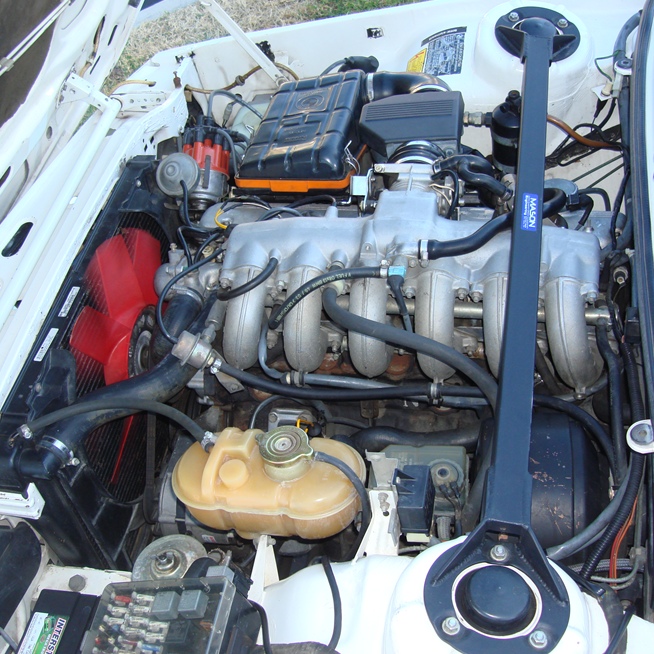
In general, it should be connected so that it is controlled by manifold air pressure. I think any place would do fine as long as it not near the throttle butterfly (like the distributor connections are) or in the pipes towards the intake valve.
1961 Simson AWO sport (Brasoveanca)
1968 BMW 114 2002
1976 BMW E12 528 (Malèna)
1987 Kawasaki GPz900r
1996 Moto Guzzi V75 PA NT
Falkenberg wrote:In general, it should be connected so that it is controlled by manifold air pressure. I think any place would do fine as long as it not near the throttle butterfly (like the distributor connections are) or in the pipes towards the intake valve.
Correct, you want manifold vacuum, not throttle body vacuum as it's not the same. It will work either way, but better if it's in the right place.
Mike W.
02 525ita. Wife's, aka grocery getter
02 530i. New to the fleet, 3 pedals.
03 QX4, AKA the Datsun. Finally got the 4WD vacationmoble to stop smoking.
07 Xterra. Still on the DL, a purchase from hell.
Check this out from what I learned Googling how fuel pressure regulators work: They regulate fuel pressure.
Cool. The fuel pump(s) pump fuel, the regulator has a diaphragm in it, effected by manifold vacuum (see vacuum tube on one side of the barrel). The amount of vacuum tells the diaphragm how much fuel the injectors need to run good. See the fuel lines in and out of the barrel.
Too much, the diaphragm lets the extra fuel go back to the tank for further review.
If you pull the vacuum tube no fuel should leak out, indicating the diaphragm leaks. A previous post advised if the regulator fails it's usually in favor of rich.You'll get those symptoms instead of starving lean, quit.
They're not very expensive to replace, divided by their possible thirty years of previous service, if you would rather not fool around testing.
If my explanation is wrong you can Google and correct me, or I'll get scorched by an expert. Either way, my regulators are new and engines run good so I'm confused harmlessly, at worst, for my own stuff.
Indeed, it allows the fuel pressure to variate in function of the intake manifold pressure.
The idea is to keep the difference of pressure between fuel and intake manifold pressure constant, so that the injected quantity of fuel is determined only by injector pulse time.
Without that fuel pressure correction, the low intake manifold pressure would effectively draw more fuel from the injectors at low engine load.
A least, that is how I understood it.
1961 Simson AWO sport (Brasoveanca)
1968 BMW 114 2002
1976 BMW E12 528 (Malèna)
1987 Kawasaki GPz900r
1996 Moto Guzzi V75 PA NT
Falkenberg wrote:Indeed, it allows the fuel pressure to variate in function of the intake manifold pressure.
The idea is to keep the difference of pressure between fuel and intake manifold pressure constant, so that the injected quantity of fuel is determined only by injector pulse time.
Without that fuel pressure correction, the low intake manifold pressure would effectively draw more fuel from the injectors at low engine load.
A least, that is how I understood it.
Interesting to learn how all this works.
It my understanding that vacuum pressure in the manifold is high at idle (or decel.) and low at wide open throttle. In simple terms, the piston movement creates the vacuum and the throttle butterfly restricts the air intake at idle.
For this reason, I would assume that the pressure regulator will lower the fuel pressure in the rail when we have a lot of vacuum, and increase it at low vacuum. So, leaving the vacuum line off would potentially create a rich mixture?
Correct, low or no vacuum from a leaky diaphragm or pulse tube removed goes rich.
And when you take the vacuum line off it can make loud mysterious noises buzzing in the fan.
I agree with the part about learning how it all works being fun. Making something that didn't work, work perfectly again. Me 1, machine 0. Ha !
Except it's always a team deal, from all the help I get here.
Wait 'til you take the old 528 you've worked on, built to a BMW shop. To find out you're a guru. The average Tech is used to the computer plug in diagnostic problem finder. Not exactly fluent with the old timey spark, fuel trouble shooting methods. Cool, but we're nuts.
To add to your understanding, the FPR also, and most importantly, adjusts fuel pressure relative to altitude, since there is less air (oxygen) at higher altitudes. Another gee-whiz factor that came out of the '70s and into the cars of the '80s. Automatically adjusting for altitude meant you didn't have to go tinkering with the carburetor mixture when the flatlanders vacationed to the Rockies
Blaise wrote:
It my understanding that vacuum pressure in the manifold is high at idle (or decel.) and low at wide open throttle.
Yes and no. Vacuum, not pressure, is high at idle. Pressure is highest at WOT since the most pressure you can get is atmospheric, anything less is vacuum.
For this reason, I would assume that the pressure regulator will lower the fuel pressure in the rail when we have a lot of vacuum, and increase it at low vacuum. So, leaving the vacuum line off would potentially create a rich mixture?
Correct, rich at idle and normal at WOT. Except for O2 sensor equipped cars where the O2 sensor will correct for a lot of things. Still, everything works better if it's right and not just compensating.
Mike W.
02 525ita. Wife's, aka grocery getter
02 530i. New to the fleet, 3 pedals.
03 QX4, AKA the Datsun. Finally got the 4WD vacationmoble to stop smoking.
07 Xterra. Still on the DL, a purchase from hell.